Want to improve your indoor air quality?
Indoor air quality plays a direct role in human health, occupant comfort, and mechanical equipment longevity. Standard HVAC systems continuously circulate airborne contaminants through living and working spaces. Proper inline mechanical air filtration captures particulate matter before it damages HVAC blowers, fouls cooling coils, or compromises indoor air quality.
Importance of Filtration
Air filtration in residential and light commercial HVAC systems serves two primary functions: protecting mechanical equipment and safeguarding indoor air quality. Without adequate filtration, dust and debris accumulate on blower wheels and heat exchangers. Dust buildup on evaporator coils acts as an insulator, reducing thermal transfer efficiency, increasing energy consumption, and raising the risk of system breakdown.
From a health perspective, effective filtration removes particulate matter that penetrates deep into human lungs. Maintaining clean air paths keeps HVAC airflow velocity stable and reduces static pressure resistance caused by dirty components.
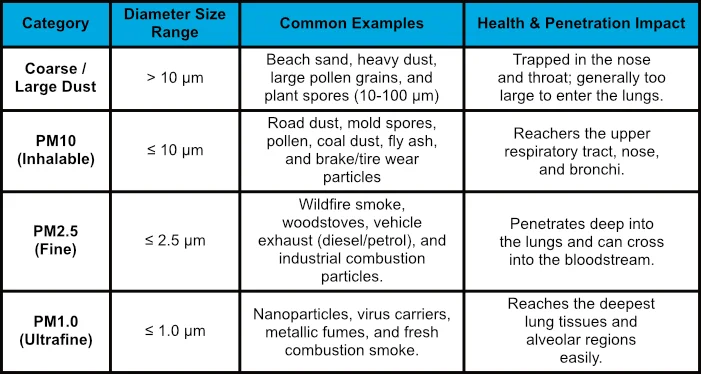
Particle Sizes and Contaminant Profiles
Airborne particulates are measured in micrometers, commonly known as microns. A single micron equals one millionth of a meter. For scale, a single strand of human hair averages 50 to 70 microns in diameter. Most health-damaging contaminants are far smaller and completely invisible to the naked eye.
The Solution? Filter Boxes
What is a Filter Box?
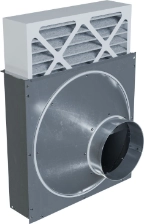
An inline filter box is a sealed sheet metal cabinet installed directly within standard ductwork runs. Available in duct collar sizes ranging from 4 inches to 20 inches, a filter box creates an airtight housing along the duct line. It features insulated or gasketed access doors with quick-release latches allowing rapid filter replacement without disassembling ductwork.
Usage
Unlike central furnace filter racks built for high-volume air handlers moving 1200+ CFM, inline filter boxes are typically designed for targeted, lower-volume duct runs operating between 100 to 800 CFM. Here are a couple of filter box applications:<.p>
- ERV/HRV: When placed upstream of an ERV or HRV, it will pre-filter fresh outdoor air coming into the home delivering clean makeup air to living spaces.
- Concealed filtration: In conjunction with an inline fan, these systems can be concealed in the ceiling creating a specialized HEPA filtration system that doesn’t clash with the aesthetics of the room.
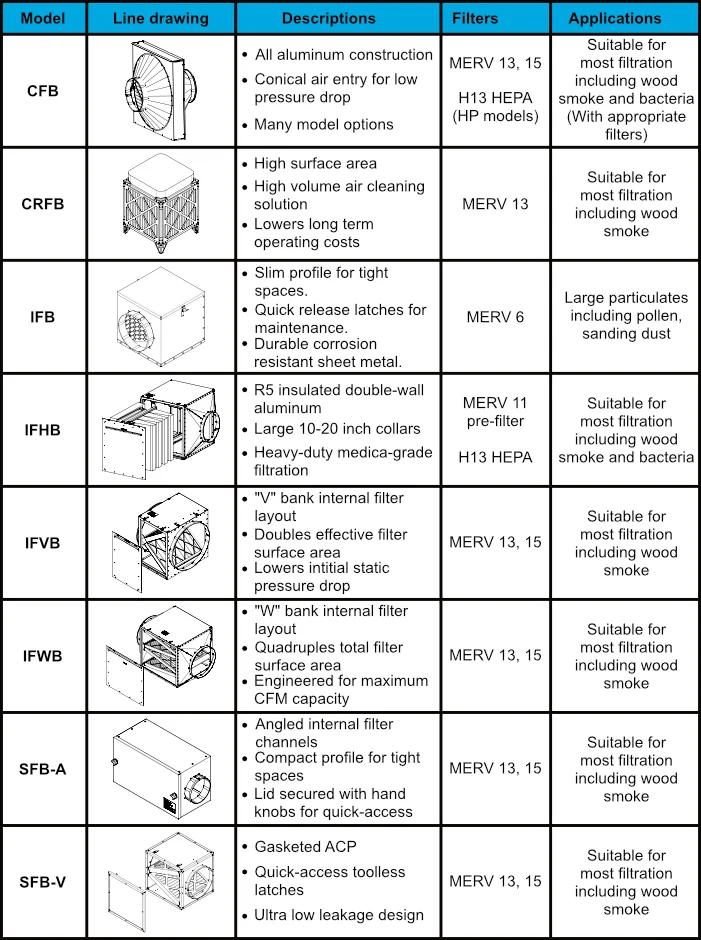
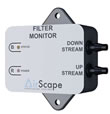
Thanks to deep-pleat and V-bank/W-bank configurations, the expanded surface area significantly lowers static pressure drop and extends filter lifespan, making maintenance less frequent. When paired with the AirScape Digital Filter Monitor, differential pressure tracking provides timely, automated reminders when it is time for a filter swap to keep your system performing at peak efficiency.
Filter Ratings: MERV Ratings vs. HEPA
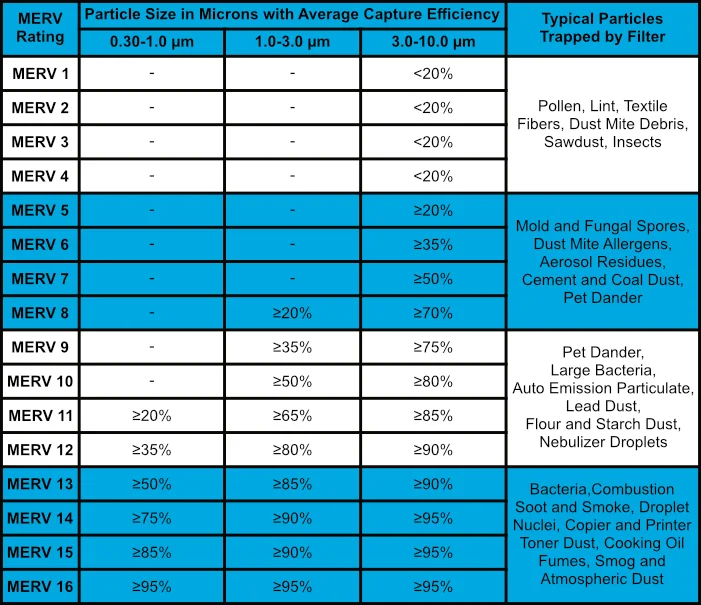
Air filter efficiency is rated using the Minimum Efficiency Reporting Value (MERV) scale, developed by ASHRAE under Standard 52.2. MERV ratings range from 1 to 16 for standard media filters.
MERV Breakdown
MERV vs. HEPA Filters
High-Efficiency Particulate Air, or HEPA filters do not use the MERV rating system because their performance exceeds standard MERV test capabilities. In the US, there are no HEPA certifications for filters used in household consumer air purifiers. To compensate, we adhere to EN 1822, the European standard for HEPA filters. Our HEPA filters use the H13 class HEPA which runs at an efficiency of 99.95% down to 0.3 microns in size. In comparison, MERV 15 air filters have an efficiency of 85% down to 0.3 microns in size.
Using a Pre-Filter
HEPA filter boxes usually incorporate a lower-MERV pre-filter (typically MERV 8 or MERV 11) positioned directly upstream of the primary HEPA core. The pre-filter captures large dust, pollen, and debris before they reach the main HEPA filter. This design extends the lifespan of the expensive HEPA core from months to years, keeping operational costs manageable. Pre-filters should be replaced every 3 to 6 months, while the primary HEPA filter is replaced every 2 to 3 years.
Featured Product: The IFHB Series Inline HEPA Filter Box
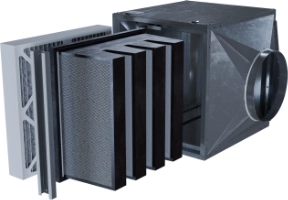
The IFHB Inline HEPA Filter Box delivers medical-grade air purification for demanding commercial and industrial environments. Designed to tackle particulate sensitive applications such as welding shops, metal fabrication facilities and clean rooms, the IFHB housing pairs a 4” thick MERV 11 pleated pre-filter with a primary 12” thick H13 HEPA core. The integrated MERV 11 pre-filter traps coarse dust and heavy particulate matter before it reaches the main filter bed, protecting the expensive HEPA core from premature loading and extending its service life. Independent testing from AirScape’s air lab validates the high-volume airflow capabilities of the IFHB housing under heavy static loads. Operating at a standard performance target of 8 Air Changes per Hour (ACH), a single IFHB unit effectively purifies spaces reaching 12,000 cubic feet. This makes it an ideal mechanical air cleaning solution for industrial facilities where maintaining low particle counts and strict indoor air quality standards is critical.
Inline Filter Box Products
Inline Filter Boxes
Filter boxes fit inline and contain replaceable filters. It's important to filter air and this makes it simple.
Corsi-Rosenthal Style Filters
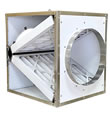
Corsi-Rosenthal style boxes are a cost-effective air filter that improves indoor air quality by effectively capturing airborne particles like dust, pollen, pet dander, mold, and respiratory droplets.

Filter Pressure Monitors
Monitor the pressure changes in an HVAC system, triggering audible and visual alerts when the filters needs swapping out.
HEPA Filtration
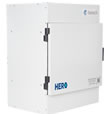
HEPA filters can take out the smallest particles from your air. 99.97% effective down to 0.3 microns.

why buy from us?
We're engineers passionate about home ventilation and serious about customer service – so you can count on us for carefully-selected equipment and expert advice to ensure your project is a success from specification to installation.
Your call is answered by qualified people who will gladly discuss your project in detail, advise you professionally and never sell you inappropriate products.