
Indoor Air Quality. It's Simple
Exhaust... Ventilate... Filter
The Basics
- Exhaust odors and excess humidity.
- Ventilate your house with fresh air to dilute any pollutants.
- Filter out allergens using a high MERV or HEPA filter.
- Use HRV and ERV's to ventilate, while recovering exhaust heat or cool.
- Have your house checked for radon gas and mitigate with radon fans as required.
COVID-19 has made us all rethink the safety of indoor spaces. Although the scientific research is not complete, consensus is that a large component in viral transmission involves breathing in airborne micro-droplets.
One of our most popular categories in the last couple of years has been inline filter boxes. They range from basic MERV-6 boxes like our house brand IFBA series or the S&P FB series to MERV 13/15/16 available in the CFB and SFB series boxes.
Our Main Office IAQ
As measurement of indoor air quality (IAQ) parameters have gotten better, faster and cheaper we’ve taken advantage of this to instrument our offices.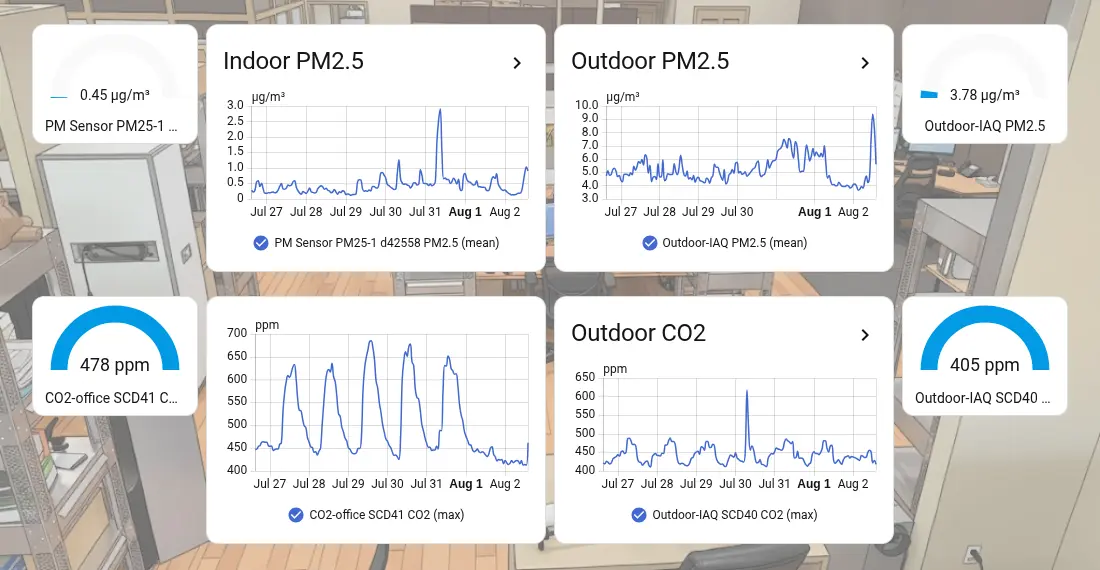
You’re looking at data from our office in Medford, Oregon. The data is sent to our servers every 5 minutes (refresh page to see newest data).
- Measured in parts per million (PPM) You can expect about 400-450 PPM outdoors
- Anything above 1000 PPM for extended periods may lead to drowsiness and loss of cognitive abilities (as in you get mentally slower)
- Higher levels of CO2 may also indicate that other pollutants (harder to measure) are also present in higher concentrations
- See these links for more details:
- We are measuring PM2.5 which in our case is the weight (micrograms) of particles less than 2.5 microns per cubic meter
- These small particles (from diesel, smoke, etc) are particularly bad for us because they make their way into our lungs and are hard to expel
- Kitchen activity (frying, searing, burning fuel) are also big contributors to indoor particulates
- If you have low levels of particulates, you’re probably cleaning the air of aerosols. Aerosols are the primary vector for air borne viruses (think influenza, colds, covid) https://pmc.ncbi.nlm.nih.gov/articles/PMC8721651/
- How we fixed our particulate problems
- MERV13 filters on all outside air coming into ERVs and HRVs
- MERV13 filters on all air handlers
- CR style filter boxes situated throughout the building
- HEPA filtration units
- Make sure that you have good kitchen exhaust to reduce particulates from cooking
What can you do?
- We stock and sell many brands of ERVs, HRVs: https://hvacquick.com/products/residential/HRVs-and-ERVs
- CR boxes – a great and inexpensive filtration concept: https://hvacquick.com/products/residential/Indoor-Air-Quality/Inline-Filter-Boxes/HVACQuick-CRFB-Box
- We stock many brands, as well as manufacturing our own line of filter boxes https://hvacquick.com/products/residential/Air-Filters
- Exhausting kitchen produced particulates: https://hvacquick.com/products/residential/Kitchen-Exhaust
Footnote on ERVs and HRVs:
- The smart way to fix CO2 problems is to use Energy Recovery Ventilators (ERVs) or Heat Recovery Ventilators (HRVs)
- You can also just open a window, but this will lead to loss of conditioned air
- ERVs and HRVs minimize loss of conditioned air by recovering the heat or cool, while still bringing in fresh and filtered air
Note on our measurements:
We measure particulates and carbon dioxide levels (inside and outdoors). A thorough analysis of air would include volatile organics (VOC’s) and other pollutants, which is beyond the scope of our measurements. If you have good values for CO2 and particulates, and you don’t live next to an airport or other concentrated pollution source, your other IAQ values will most likely be just fine.
Indoor Air Quality Products
Air Exchange Ventilators
Air exchange ventilators pull in fresh air and exhaust stale air. They DO NOT provide energy recovery like HRV or ERV's.
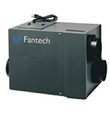
Air Inlets & Fresh Air Kits
Through the wall make-up air inlets and fresh air inlet kits. Inlets available in round, rectangular, self-regulating, adjustable, and filtering models.
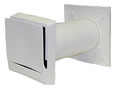
Air Purifiers
Room and large space purifiers that improve indoor air quality (IAQ) safely and efficiently. For cleaning the air, typically via filtration.
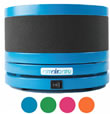
Airflow Regulators
Airflow Regulators are modulating orifices that automatically regulate airflows in duct systems to constant levels. These can be passive or active (powered with sensors) devices.
Active Dampness Control
Remove moisture and radon gas before it enters your house.

Dehumidifiers
Dehumidifiers for moisture control of spaces. Reduce risk of mold and mildew growth.
Duct Heaters - Electric
Electric duct heaters come complete with electrical safeties. They can be ordered with single, multi-stage, or modulating control.
Energy Recovery ERVs
Energy Recovery Ventilators provide fresh air, while recovering thermal energy (heat and humidity) from the exhaust air.
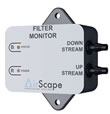
Filter Pressure Monitors
Monitor the pressure changes in an HVAC system, triggering audible and visual alerts when the filters needs swapping out.
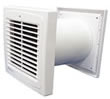
Garage Ventilation
Garage (residential) ventilation fans. Control heat and fume buildup using continuous or intermittent ventilation
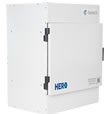
HEPA Filtration
HEPA filters can take out the smallest particles from your air. 99.97% effective down to 0.3 microns.
Humidifiers
Residential and light commercial humidifiers. Ducted and direct space distribution versions.
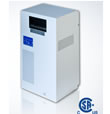
Heat Recovery HRVs
Heat Recovery Ventilators provide fresh air, while recovering heat from the exhaust air.
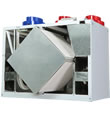
Inline Filter Boxes
Filter boxes fit inline and contain replaceable filters. It's important to filter air and this makes it simple.
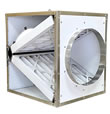
Pressure (Air) Balancing
Relieve pressure build up in the home by allowing the movement of air from one room to the next. Wall and door air pathways.
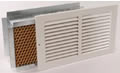
Radon Fans
Radon fans remove harmful radon gas before it gets into your house.
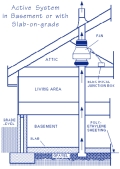
Radon Sensors
Radon sensors and airflow monitors for residential and commercial applications.
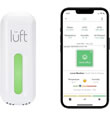
Supply Air Ventilators
Fan systems for filtering and distributing incoming fresh air to residences while preventing the unwanted introduction of contaminants from depressurization and infiltration.
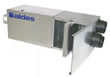
Thermostats
Residential and light commercial thermostats for controlling heating and cooling equipment. Standard 24VAC and line voltage (115V) versions.
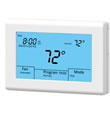
UVC Lights and Systems
Ultraviolet (UVC or UVGI) sir sanitization technology. Reduce 99.7-9% of airborne pathogens.
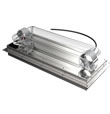
Zoned Exhaust Systems
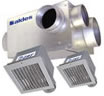
Zoned central ventilation systems. They reduce the load on heating and cooling systems because they do not ventilate all bathrooms simultaneously - only the one in use.
Call us with Questions.

why buy from us?
We're engineers passionate about home ventilation and serious about customer service – so you can count on us for carefully-selected equipment and expert advice to ensure your project is a success from specification to installation.
Your call is answered by qualified people who will gladly discuss your project in detail, advise you professionally and never sell you inappropriate products.